
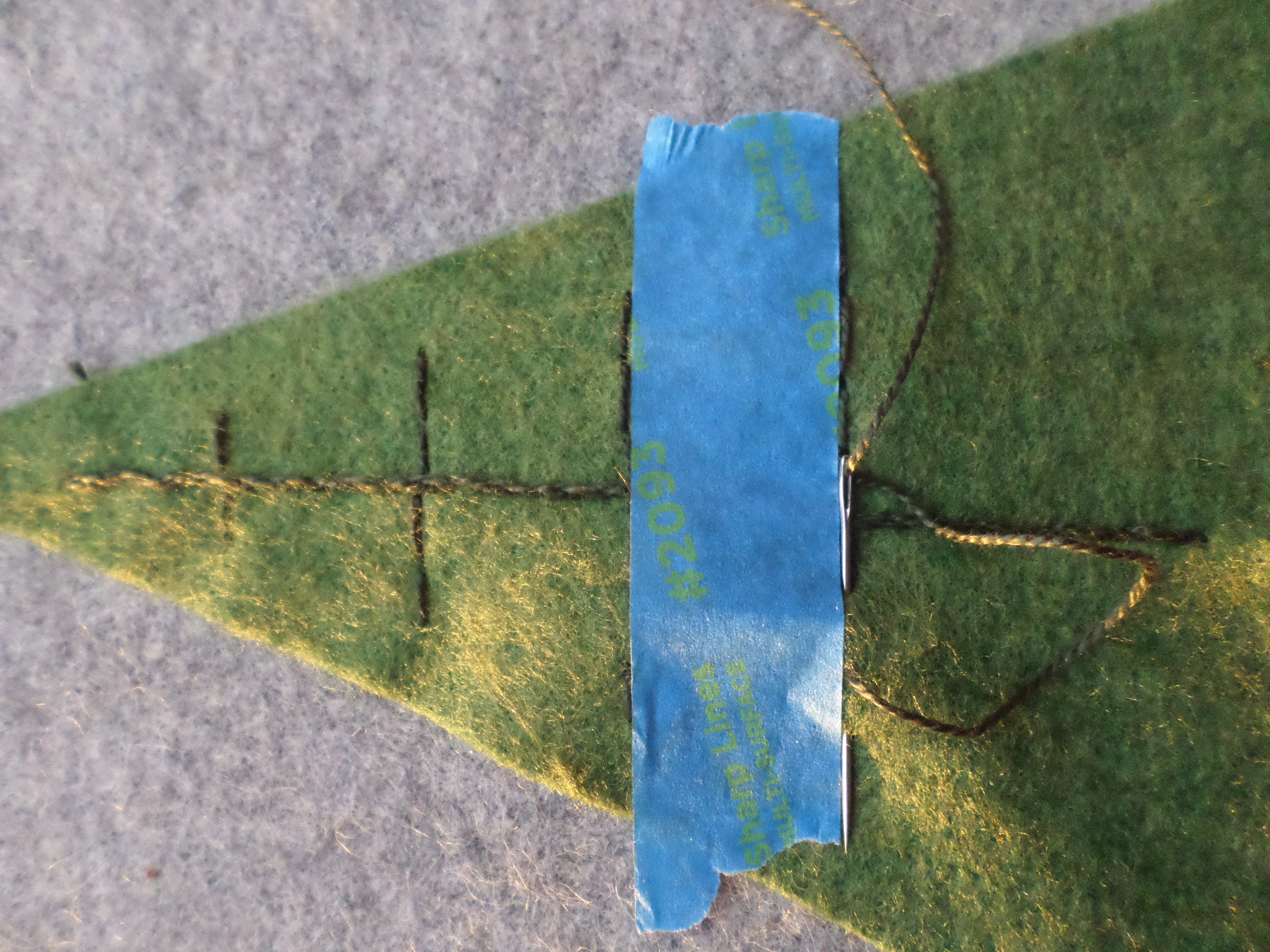
Straight Lines
Use masking tape as a guide to make straight lines.
Stitch along the edge of the tape to make a straight line.
To make evenly spaced lines cut the tape to desired width and use tape to measure distance between lines. Move tape from the top of a line of stitches to the bottom of the line and make your next line of stitches along the opposite edge of tape.
When finished stitching remove tape and discard.
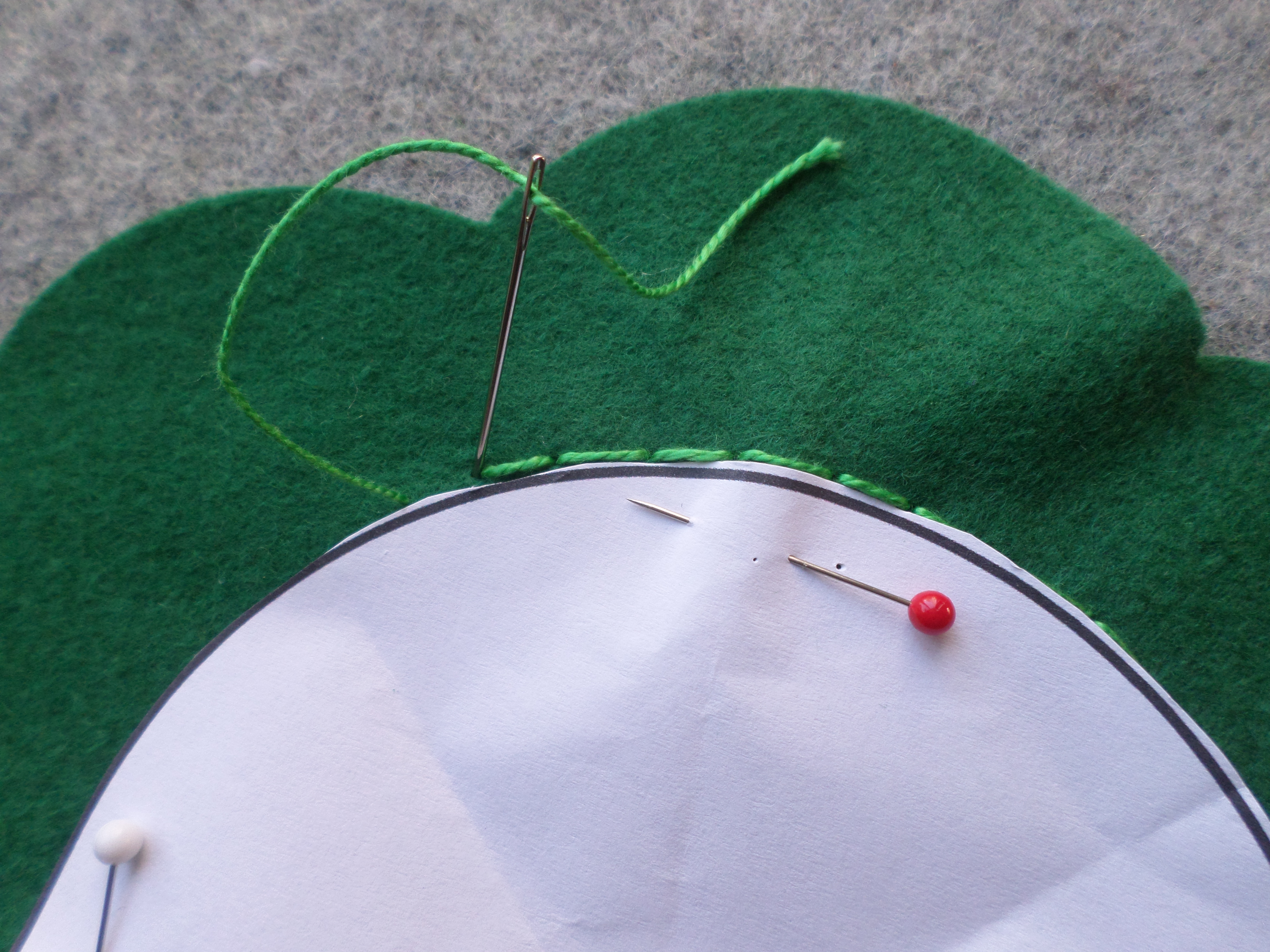
Curvy Lines
Use scrap paper to trace a design.
Cut a pattern from a piece of scrap paper and pin into position.
Make stitches along the edge of the scrap paper.
When finished remove paper and pins.
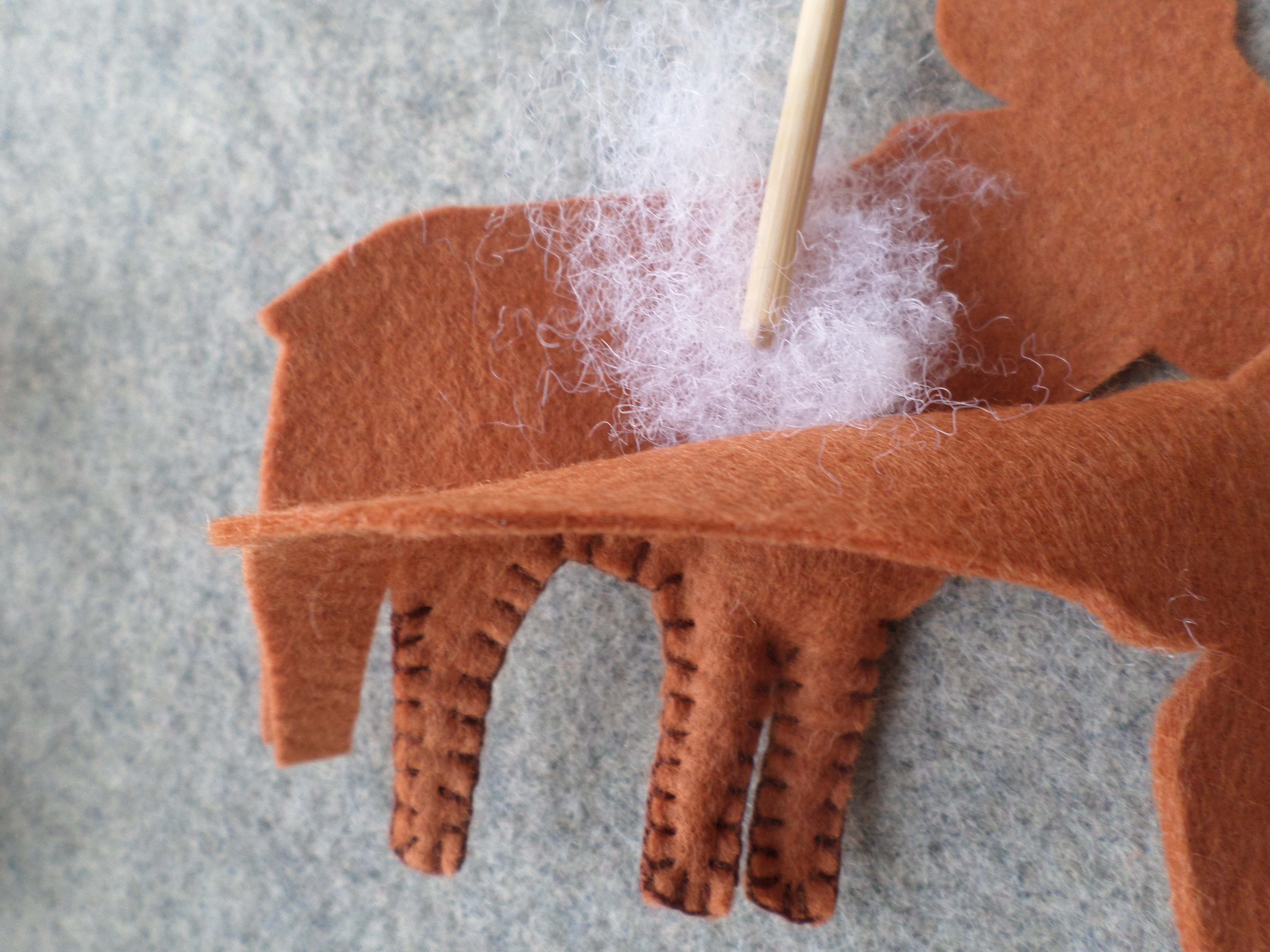
Stuffing
Different tools work best in different situations.
Rounded shapes like circles or hearts are best stuffed using your finger after most of the edges have been stitched together.
The eraser end of pencil works well to push stuffing into long spaces that your finger can't reach.
We like to use a bamboo skewer, chopstick or paintbrush handle for tight corners and skinnier spaces like legs, antlers and lobster claws.
Tools should be BLUNT. Sharp, pointy tools won't push the fill but they will pierce through the felt or your seams.
Unpainted wood tools work best because the rough surface creates more friction and helps to push in the fill.
Our favorite tool to use is a bamboo skewer that has been broken in half. We use the broken end to push in fill.
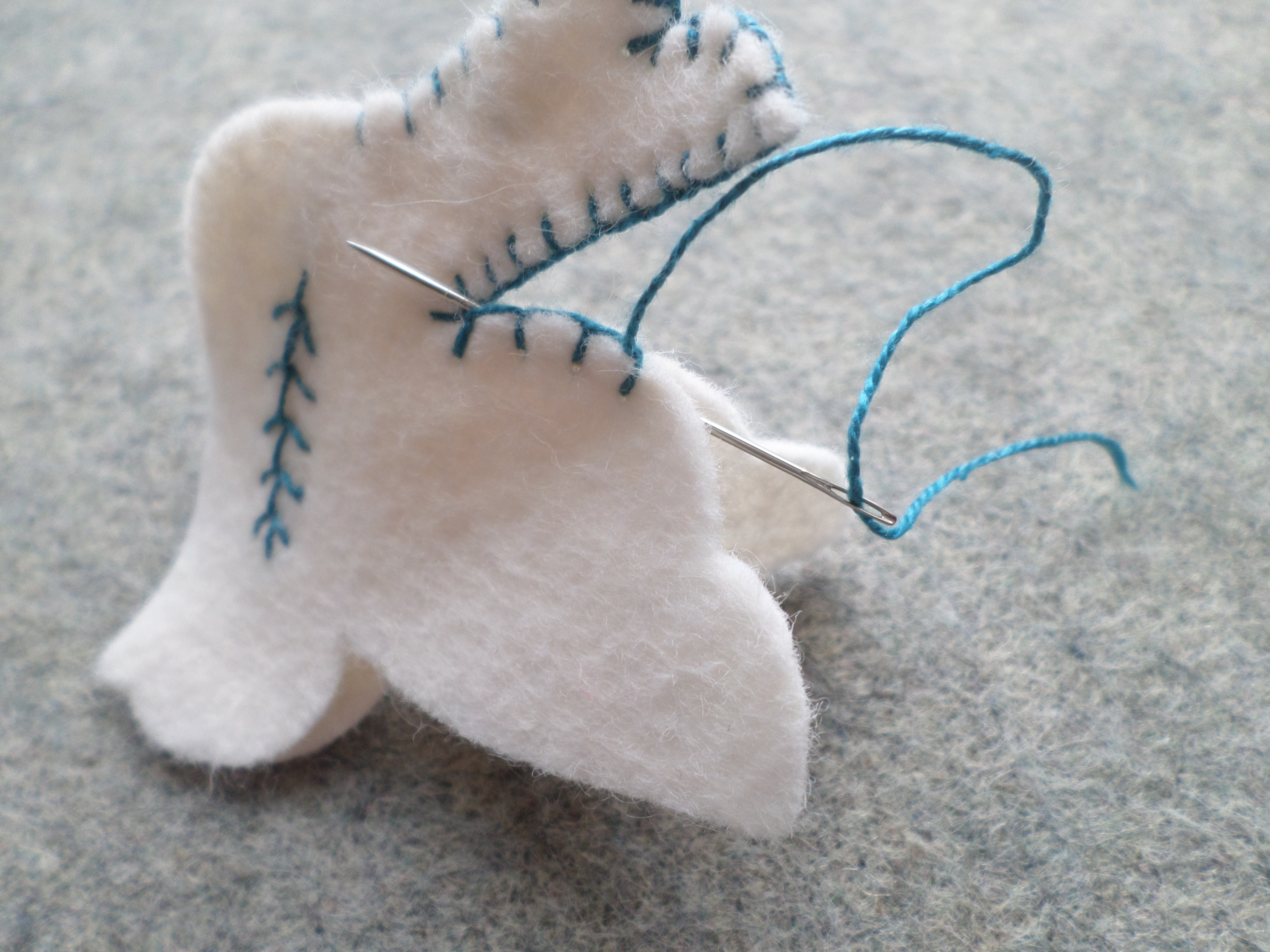
Starting & Finishing a Thread
When we start a thread we make a knot and then run that thread carefully inside one layer of felt near where we want to start stitching. The trick is to make sure the thread is not visible from the "right" side of the felt (the side that will be visible when you're finished.)
When a thread is finished, either because it is too short or because we've finished stitching, we run our needle through the felt in the opposite direction from the stitches we've just made. You are effectively sewing the thread into place on the inside of the work. The trick here is to make sure that the needle is not visible on the "right" side of the work (check both the front and the back). We check the needle before we pull it it through. If the needle is visible through the felt then back it out and try again. When the needle is run through the felt inside without being visible on the right side of the felt then we pull it through. Then we trim the excess thread where it emerges from the work. The friction of the felt is enough to hold the thread in place so there is no need to make a knot.
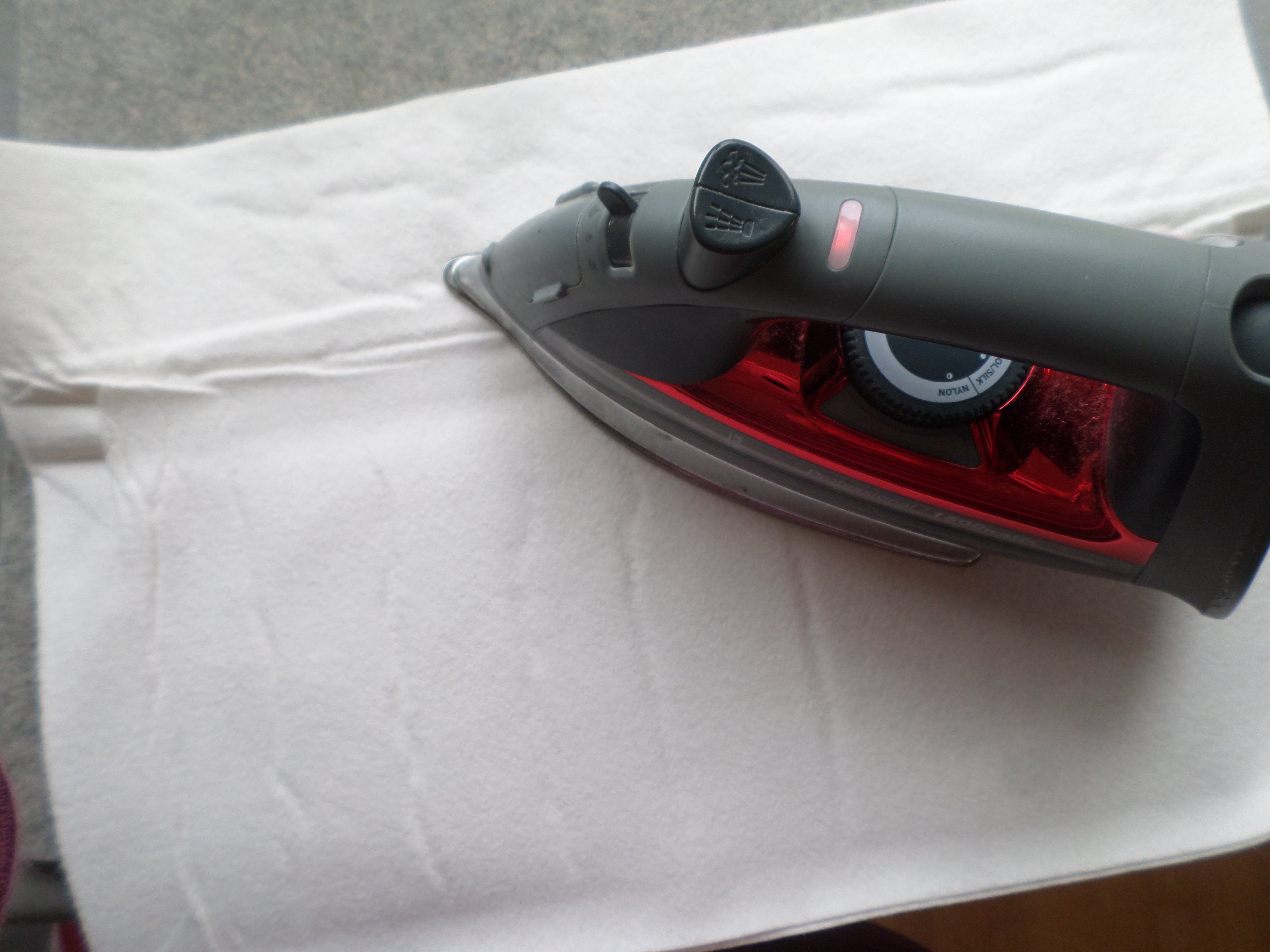
Wrinkles
We use a warm iron with steam to iron out wrinkles from the felt. For stubborn creases we like to give the felt a spritz of water from a spray bottle.